
An old-school run-and-gun, made today for a machine from 1990. Two years later, Sarah goes back alone to a military base nobody should have opened. They say Miguel has changed. The rest, you had better see for yourself.
In development
01 · The intro
“I no longer remember when the silence began.”
That is how it begins. Eight scenes, just over a minute, music for the machine's sound chip and not a single pixel that does not come from the cartridge. These images are captures of the intro running on an emulated CPC Plus. On the cartridge its text is in Spanish; here you have it translated.
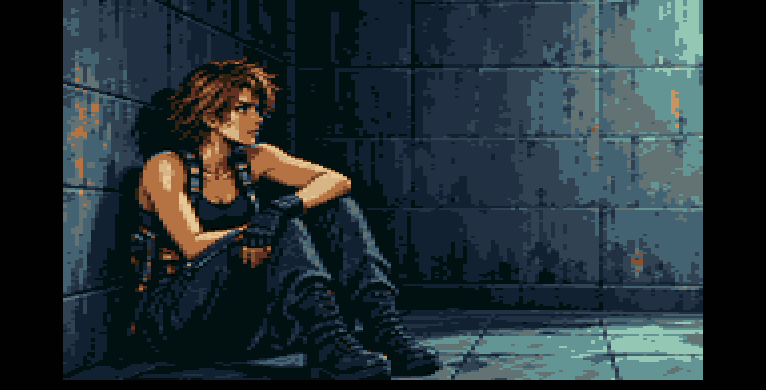
“I no longer remember when the silence began.”
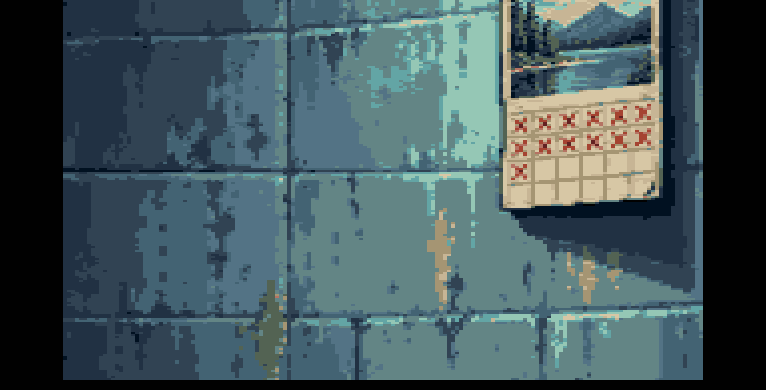
“We crossed off the days, waiting for an answer.”

“But the fear never slept.”

“Another flight. Another chance.”

“We searched for survivors. Only the dead answered.”

“The world already belonged to them.”
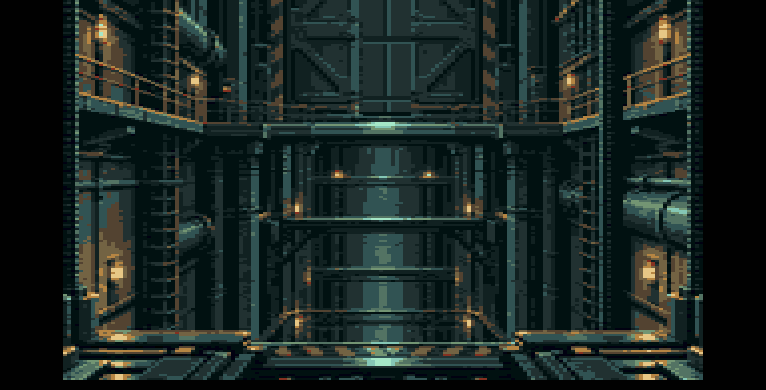
“Underground, we thought we were safe.”
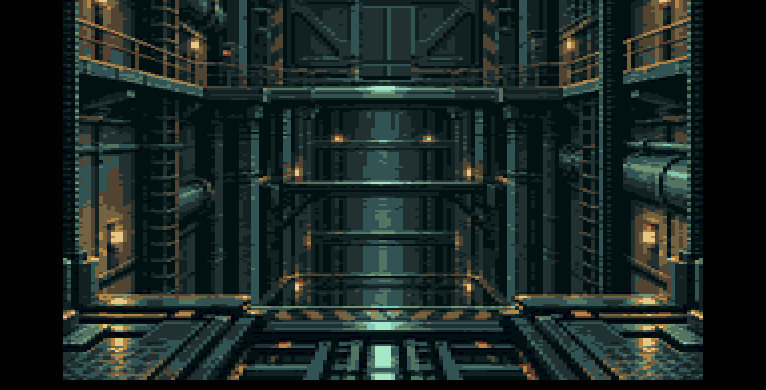
“We were wrong.”
A good minute of the cartridge's intro, recorded in an emulator. On-screen text in Spanish.
02 · The story
What happened down there
The world ended without warning. What is left of the government sends out patrols to look for survivors, and they nearly always come back empty.
Two years have passed since Sarah left the base. Every week she called on the radio and only Miguel answered. Now they say Miguel has changed: he no longer brags about anything and goes down alone to the sealed floors.
Sarah goes back to see what he has found down there. Those who used to be the base's staff are still on duty, in their own way.
And the deeper she goes, the worse it all looks. Because what was on the other side of containment did not get out by itself.
It was no escape.
-

Sarah
Scientist, capable and fed up. The one who goes down when somebody has to. If something can be fixed, she fixes it; if not, she shoots it.
-
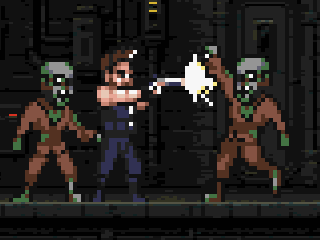
Miguel
He is nearly always right, and he knows it, which is the worst thing about him. Or it was: they say he has changed.
-
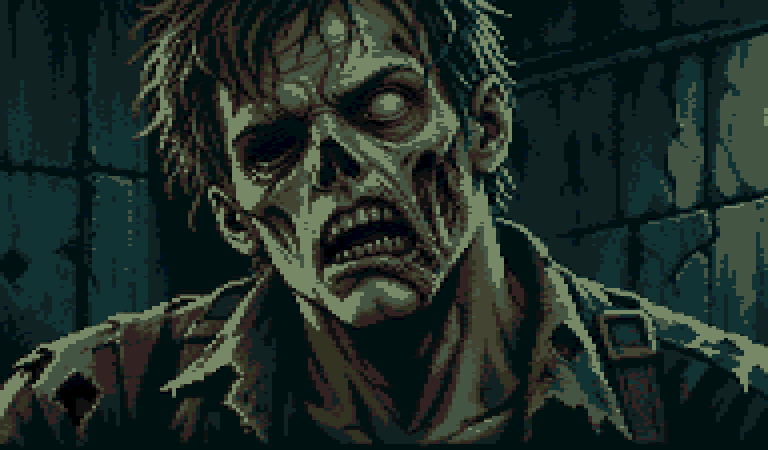
Them
They used to run the base. Now they walk, they bite and they never tire. And one or two of them are learning.
03 · The game
A run-and-gun at 50 frames per second
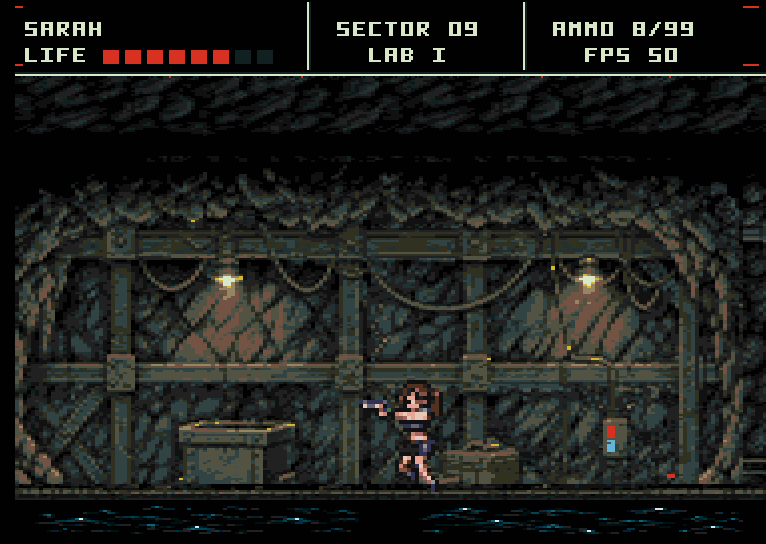
Side-scrolling platforms and shooting in the spirit of late-80s arcade games, but designed around what a CPC Plus can really do when you push it.
- 50 fps
- Scrolling and characters at the screen's refresh rate, without judder.
- 192 × 272
- Full-screen Mode 0, without the usual border.
- 16 sprites
- The Plus ASIC's own, shared out to fit in more enemies.
- 3 channels
- Music and effects composed for the original AY sound chip.
- 9 zones
- Three levels of three zones each, from the surface to the bottom of the base.
- 1.5 MB
- On a picoGX cartridge. In 1990 a Plus cartridge held 128 KB.
04 · The machine
Why a CPC Plus?
In 1990 Amstrad released the CPC Plus and the GX4000 console. Inside, the same old Z80 at 4 MHz; beside it, a new chip, the ASIC, with 4,096 colours, 16 hardware sprites, fine scrolling and programmable interrupts.
It arrived late, sold little and hardly anyone pushed it. Thirty-odd years later, we want to see how far it can go.
Puto Zombie runs from cartridge: on a real machine with a picoGX cartridge, or in an emulator that supports the Plus.
- MachineAmstrad CPC Plus (6128 Plus)
- ProcessorZ80 at 4 MHz
- Memory128 KB RAM
- VideoASIC: 4,096 colours, 16 sprites, fine scrolling
- SoundAY-3-8912, three channels
- Format.cpr cartridge, picoGX
05 · About us
Who we are and what we want
Puto Zombie is a personal project, with no publisher and no imposed deadline. We do it because we grew up with an Amstrad and we still believe a small machine, well used, can do far more than was ever got out of it at the time.
We make it with the help of artificial intelligence: code, art and music pass through human hands and AI models, and every piece is tested on the machine before we accept it.
Progress
- DoneFull-screen scrolling engine at 50 fps
- DoneSarah, Miguel and the zombies, with their animations
- DoneMenu with music
- In reviewIntro
- In progressLevels, missions and radio with Miguel
- LaterThe cartridge, when it is right